
Short Distance Movers in Texas: Lease Rules and Timing
Most Texas residential leases require 30 or 60 days written notice before move-out, and missing that window can cost you a full extra month of rent. That means the move and the notice have to be coordinated backward from the lease deadline, not forward from the day the truck gets booked.
You're probably staring at a lease end date, a renewal you haven't signed, and a stack of boxes you still haven't labeled. That's the wrong order. A short-distance move isn't just about getting furniture from one address to another, it's about hitting the notice date, clearing the unit on time, and avoiding a rent overrun that turns a local move into an expensive mistake. The crew you hire matters because it's the timing mechanism that keeps the rest of the plan from falling apart.
Table of Contents
Why Your Lease Deadline Drives Everything Else - Work backward from the notice deadline - The week-of-move panic is always the same
Texas Lease Rules Every Renter Should Read First - The four questions that matter
Notice, Move-Out, and Mitigation Walk Through - Backshift the calendar from the lease language
Choosing the Right Crew for a Tight Window - Compare the options by deadline risk
Access and Building Logistics Most Renters Underestimate - Ask property management the right questions
Why Your Lease Deadline Drives Everything Else
The mistake renters make is obvious. They call movers first, then read the lease when it's already too late to adjust the clock. By the time that happens, the actual problem isn't the truck, it's the rent ledger.
A local crew only helps if it's working inside the lease schedule. The unit has to be empty when your notice says it will be empty, keys have to be returned when the landlord expects them, and your belongings need to be out before the rent-through date becomes your problem again. That's why lease timing comes first and the move comes second.
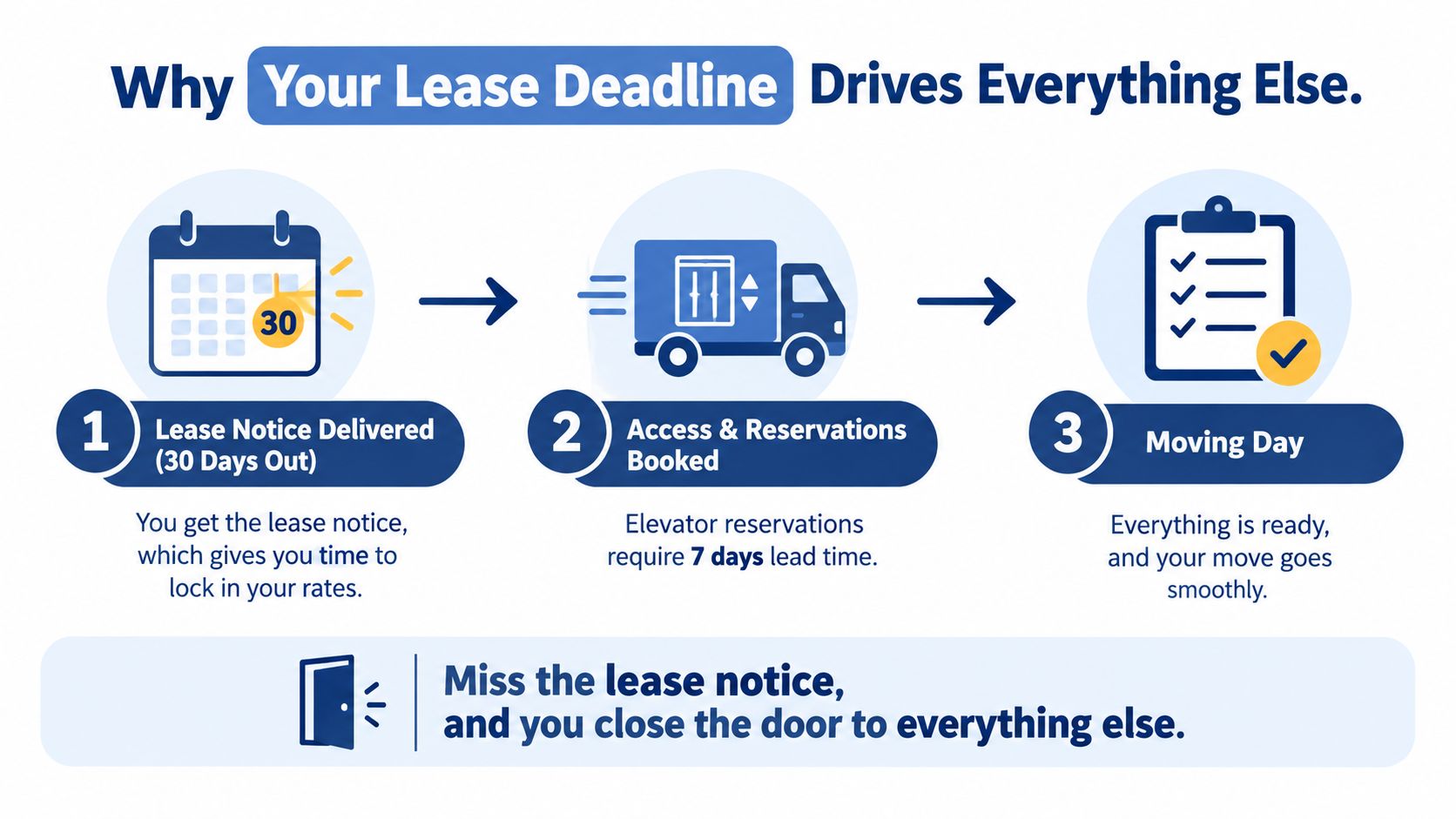
Work backward from the notice deadline
Start with the date your notice must be delivered, not the day you want boxes out. Then lock the move-out date, then reserve the crew, then handle elevator access, parking, packing, and utility handoff. If you reverse that order, you're gambling with your lease.
Practical rule: if the notice window closes before the move is scheduled, the mover can't save you from another month of rent.
That's why “on time” in Texas rental life doesn't just mean the truck arrives at 8 a.m. It means the paperwork is delivered correctly, the apartment is vacated on schedule, and nothing about the move forces you into a holdover situation. Short-distance movers are useful when they compress all that into one clean handoff.
The week-of-move panic is always the same
A renter thinks the move is local, so it must be simple. Then the lease renewal is still unsigned, the property manager wants written notice, and the earliest mover available is the only one that fits the deadline. That's not a truck problem. That's a planning failure.
Treat the move as a deadline-protection job. Get the notice in writing, confirm the move-out date, and book the mover to match the lease, not the other way around. When the lease is the boss, everything else gets easier.
Texas Lease Rules Every Renter Should Read First
Texas renters need to read the actual lease, not the memory of the last lease. The clause that matters most is usually the one people skim past. That's where the notice period, the end date, and the financial penalty live.
A lease can also include an early-termination clause, and that changes the math fast. If you leave early without the landlord agreeing in writing, you're not just moving, you're risking extra charges tied to the unit's vacancy and any lease language that applies. The safer move is to know the clause before you give your notice.
The four questions that matter
How many days of written notice are required? The answer controls when you can legally line up the move.
What exact date ends the rent obligation? That's the date the keys, access, and clean-out all have to line up with.
Does the lease mention early termination or re-letting? If it does, the cost of leaving changes immediately.
What form of notice counts? If the lease says email, certified mail, or hand delivery, use that method only.
Military families also need to check whether SCRA protections apply, because that can change how the lease ends and what the landlord can demand. Don't assume every lease break is treated the same. It isn't.
If you want a plain look at local crew options and packing help while you're sorting the lease side, start with this overview of packing and moving services. Use it as a planning reference, not as a substitute for reading your lease.
The right mindset is simple. Before you book anyone, know the notice window, the move-out date, the mitigation language, and any early-termination fee. If those four items aren't clear, you're not ready to schedule.
Notice, Move-Out, and Mitigation Walk Through
Pull the lease and find the clause that governs notice, the clause that covers move-out or inspection, and the clause that deals with early termination. Those three lines tell you more than any moving quote does. If any of them are vague, ask the landlord for the exact procedure in writing.
Written notice has to be delivered the way the lease says, not the way that feels convenient. If the lease requires certified mail, don't rely on a phone call. If it allows email, keep the sent copy and the delivery record. Paper trail beats memory every time.
Backshift the calendar from the lease language
The notice date is the first hard stop. The move-out date follows from that, and the inspection date should be set so you still have time to fix obvious issues before keys are returned. If the lease includes a mitigation or re-rent provision, your real exposure depends on how quickly the unit turns over after you leave.
Use that logic to build the move. The unit has to be cleared, the forwarding address needs to be submitted in writing, utilities need to be transferred, and the final walk-through should happen with evidence in hand. The goal is a clean exit, not a heroic last minute scramble.
Keep your own record of notice delivery, move-out condition, and key return. If there's a dispute later, those are the documents that matter.
Days Before Move-Out | Action Required | What Moves If You Miss It |
|---|---|---|
60 to 30 days | Deliver written notice exactly as the lease requires | Your rent obligation can roll forward |
14 to 7 days | Confirm inspection timing, utilities, and crew arrival | The move gets compressed and risk goes up |
3 to 1 days | Finish packing, clear trash, photograph condition, stage keys | Deposit disputes become harder to fight |
Move day | Complete walk-through and handoff in writing | You lose leverage if the unit isn't documented |
The mitigation period matters because it's the landlord's next step after you leave. If the unit gets re-rented quickly, your exposure usually shrinks. If it doesn't, you may still be on the hook for more rent under the lease terms.
Choosing the Right Crew for a Tight Window
A lease deadline turns a move into a timing problem first. The crew you hire has to clear the unit on schedule, keep the day from slipping, and leave you with a clean handoff. Compare movers by how well they protect that timeline, not by the cheapest number on the page.
Hourly crews fit simple jobs with easy access and a tight inventory. Flat-rate quotes make more sense when stairs, parking, or bulky furniture make the job harder to predict. POD-style moves can buy you flexibility, but they also put staging, loading, and repositioning on your shoulders.
Compare the options by deadline risk
Hourly crews can finish a local move in one day if the route is clean and the team stays efficient.
Flat-rate quotes give you a clearer total when access issues or heavy items make the work harder to estimate.
POD-based moves can spread the job across more than one day, which helps scheduling but can slow down access and container handling.
What you want in a written quote is clarity. Make sure it states what happens with stairs, long carries, packing labor, waiting time, and oversized pieces. Those are the items that often change the final invoice if they were left vague at the start.
For a look at what professional packing labor includes, see this overview of packing and moving services.
A binding written estimate protects you from surprise changes when the clock is already working against you. If the mover will not say what changes the total, you carry the risk. A quote that hides what changes the total transfers the risk to you, which is exactly what a binding estimate is supposed to prevent.
For Central Texas renters who want a local option that handles loading, transport, and access planning, Webster Moving Co. is one crew that works in that lane. Use any mover, but get the timeline, access issues, and labor assumptions in writing before you sign.
Access and Building Logistics Most Renters Underestimate
The hardest part of a local move is rarely the drive. It's the building. Elevators, parking, stair turns, loading zones, and gate codes can wreck a same-day plan faster than traffic ever will.
Apartment and condo moves need access planning before the first box leaves the origin. Measure the doorway, the stair turns, the elevator interior, and the path from the unit to the truck. If a couch won't fit the route, don't discover that with the crew standing in the hallway.
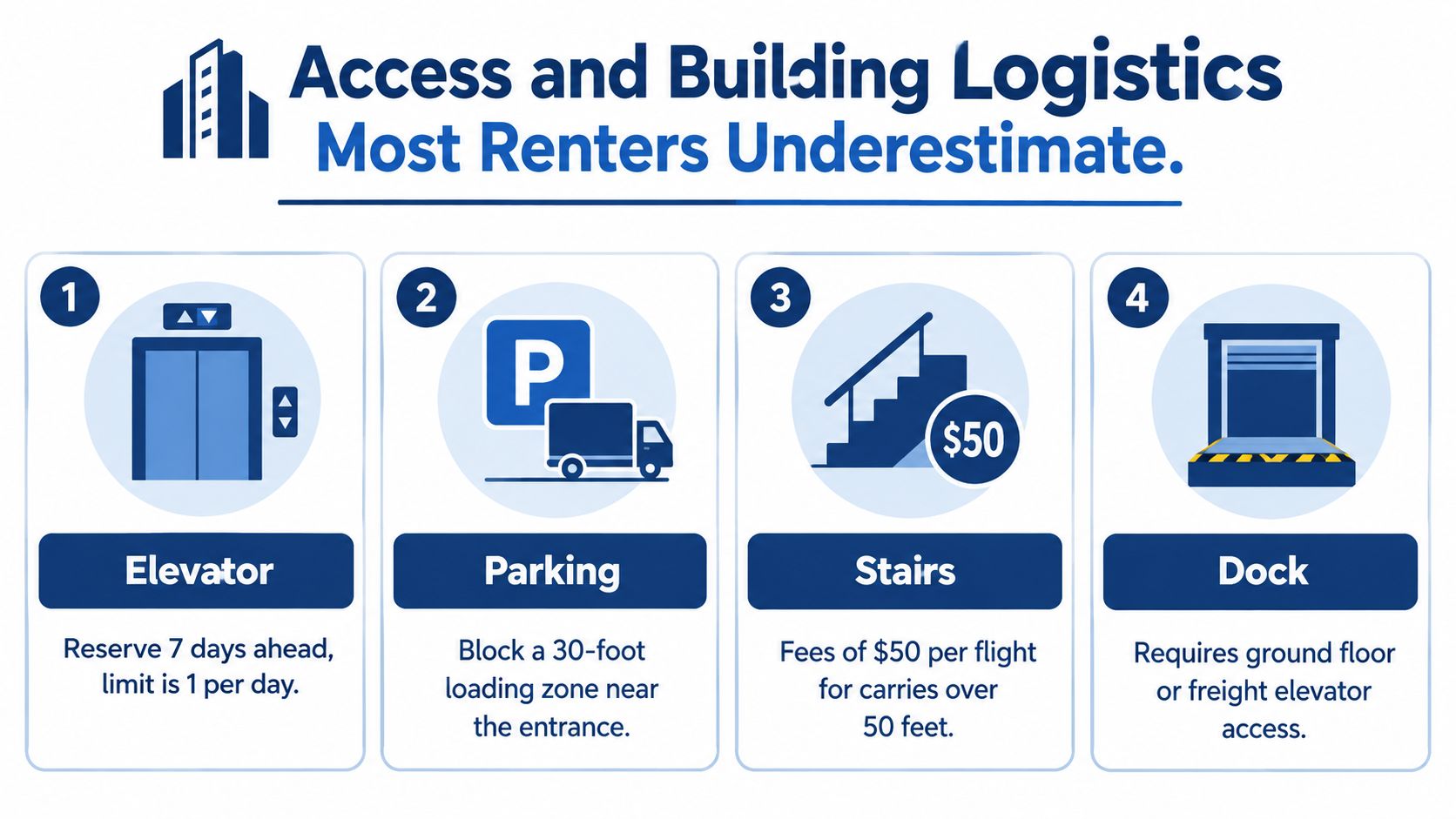
Ask property management the right questions
Who reserves the elevator? If it's not confirmed, someone is going to waste time at the front desk.
What are the loading hours? A narrow window can force the whole move into a rush.
Where does the truck park? If the answer is vague, you'll lose minutes walking every box.
What protections are required in common areas? Hallway walls, floors, and corners need to stay intact.
Are gate codes and access instructions already approved? If not, the crew will stall at the entrance.
A short move can require more labor than a longer one when the building is the bottleneck. That's especially true in dense apartment corridors, townhomes with tight stairs, and communities that limit truck access. Distance doesn't control difficulty. Access does.
If you're moving something bulky or awkward, like a piano, don't guess about it. Use a mover who has handled specialty items before. A useful reference is this piano moving guide for Austin, because specialty handling has to be planned before move day, not improvised when the door frame is already exposed.
The move gets safer when the route gets simpler. That means protecting floors, keeping the heaviest pieces staged close to the exit, and avoiding repeated trips that burn your loading window.
Protecting Your Belongings and Your Wallet on Move Day
Move day needs evidence, not optimism. Photograph the unit before the crew starts loading, photograph the big items before they leave, and keep a written record of what was on the truck. If there's a dispute later, those photos matter more than a verbal promise.
Do a quick walkthrough with the crew lead before anything moves. Mark the high-value pieces, note pre-existing damage, and confirm the inventory list before the truck pulls away. That small step protects you if the final invoice doesn't match the written quote or if damage shows up after delivery.
Keep this simple: take photos at origin, photos at destination, and a signed inventory with time stamps.
A clean move-out inspection also helps with deposit return. Leave the unit in the condition the lease expects, provide the forwarding address in writing, and keep proof that the keys were handed over. Those are the paper cuts that decide whether the move ends cleanly or becomes a headache later.
For renters who want help on the unpacking side too, pack and unpack service options can reduce the chaos after delivery. Just keep the documentation first, because service convenience doesn't replace a paper trail.
If you're using a mover, bring a one-page evidence sheet with you. It should list the inventory, the crew lead's name, the clock-in and clock-out times, any pre-existing damage, and your forwarding address. That one page can save you a fight over money later.
If your lease deadline is close and you need a local crew that can work around apartment access, packing, and specialty items, contact Webster Moving Co. and get the move calendar aligned before the notice window closes. Visit Webster Moving Co. to line up a local move that matches your lease instead of fighting it.
Comments