
Pod Loading Help: How to Load a POD Safely
You've booked a portable container, started packing, and reached the furniture that won't move without a plan. The sofa looks manageable until you consider the hallway turn. The book boxes are heavier than expected, and you're still deciding where the container can sit.
POD loading help starts before anyone lifts a box. A workable move follows a deliberate sequence: confirm access, separate unsuitable items, check weight, then build and restrain the load. Whether you're handling a Central Texas move yourself or hiring a crew, those decisions should be settled before delivery day.
Table of Contents
Check Site Access Before the Container Arrives - Walk the Delivery Route - Record What the Crew Needs
Items That Cannot Ride in a Container - Items to Load, Hand-Carry or Dispose of Before a POD Move - Screen Each Room Before Packing
Container Weight Limits and How to Stay Under Them - POD Weight Limits by Container Size - Build a Dense-Item Inventory
Load and Restrain the Container in Order - Restrain Each Completed Section - Check the Load Before Locking
Hire Loading Help or Load It Yourself - Load It Yourself or Hire Loading Help - Decide What You're Paying to Avoid
Check Site Access Before the Container Arrives
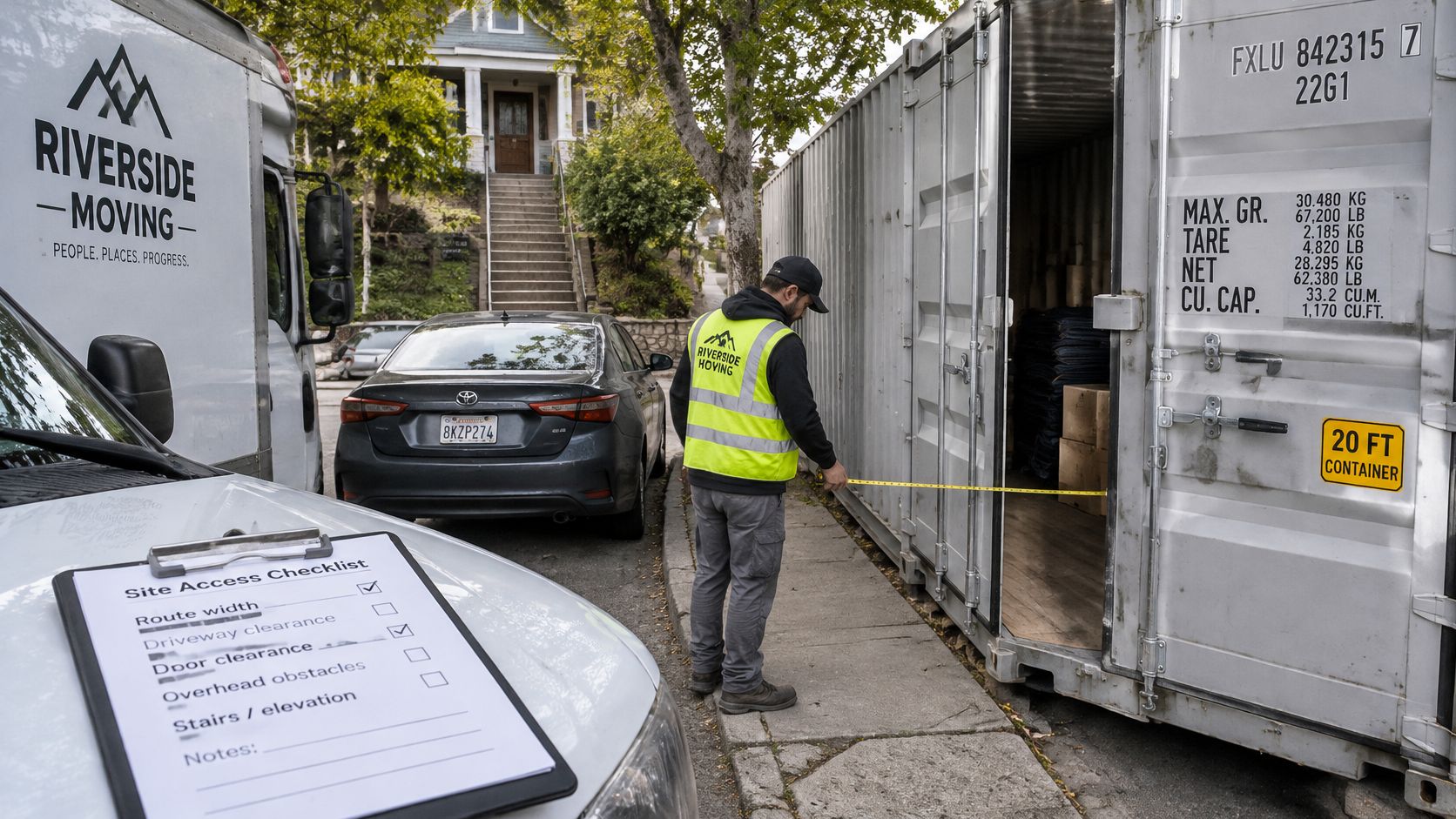
The truck can't approach the driveway, the container blocks a sidewalk, or the placement leaves no working room at the entrance. Any of those problems can stop a move before loading begins. A clear space on the driveway isn't enough, because the delivery vehicle needs room to approach, position, and retrieve the container.
Use an approach approximately 12 feet wide, 15 feet high, and 40 feet long as an initial planning check, then confirm your provider's actual equipment requirements; the storage-container access and municipal-permit guidance also distinguishes placement requirements that must be checked locally.
Walk the Delivery Route
Walk from the street toward the proposed container location, checking conditions in the order the driver will encounter them.
Surface and slope: Flag steep grades, soft ground, broken pavement, and abrupt driveway transitions for the container provider.
Overhead clearance: Look for branches, wires, roof overhangs, and carports, not just obstructions at eye level.
Vehicle conflicts: Arrange to move parked cars before delivery rather than expecting the driver to work around them.
Working space: Allow room to operate the container entrance fully and turn furniture without stepping into traffic.
Decide whether the container will remain entirely on private property or occupy a public street. Municipal requirements differ, so Greater Austin residents should verify city or county placement rules rather than assume the container company handles every permit.
Access rule: Approve the delivery route and the carrying route separately. A truck may reach the container location while movers still face an unusable path from the house.
Record What the Crew Needs
For apartment moves, we ask customers to identify stairs, elevators, loading areas, gate codes, and parking restrictions so we can plan accordingly. Include elevator reservations and building access windows in the same message.
Before delivery, photograph the approach, placement area, and carrying route. Mark tight turns and clearance concerns, then review how POD storage works so delivery, loading, storage, and pickup fit the same schedule.
Items That Cannot Ride in a Container
The common mistake is assuming that anything safe inside a house is safe inside a sealed moving container. A garage can hold lawn equipment, paint, and propane, but that doesn't make them acceptable cargo. A bedroom drawer can hold prescriptions and jewelry, yet neither belongs in an unattended load.
The PODS frequently asked questions identify prohibited or restricted categories and belongings unsuitable for container storage, including hazardous materials, perishables, firearms, medications, valuables, important records, and stored data. Provider restrictions and sensible hand-carry decisions aren't always the same thing.
Items to Load, Hand-Carry or Dispose of Before a POD Move
Item category | Container rule | What to do instead |
|---|---|---|
Fuels and propane | Prohibited | Drain fuel from eligible equipment; take propane tanks to a licensed drop-off |
Compressed gases and chemicals | Prohibited | Dispose through a hazardous-waste drop-off |
Perishables | Prohibited | Move food separately or dispose before loading |
Firearms | Restricted | Confirm provider rules first; arrange separate transport |
Medications | Restricted | Hand-carry |
Financial records and identity documents | Not suitable for unattended storage | Hand-carry |
Jewelry and irreplaceable artifacts | Not suitable for unattended storage | Hand-carry |
Hard drives and backup media | Temperature-sensitive | Hand-carry |
Batteries in equipment | Remove where required | Remove before loading |
Don't confuse legally movable with appropriate for storage. You may need a passport during the move, a prescription before the container reaches its destination, or financial records while your possessions remain inaccessible. A family heirloom also deserves a different decision from replaceable kitchenware.
A laptop holding the only copy of your tax files creates another avoidable risk. Make a separate backup before moving, then keep the computer and backup media under your control rather than placing both in the same container.
Screen Each Room Before Packing
Walk through the kitchen, bathrooms, office, bedrooms, and garage with separate destinations marked load, hand-carry, and dispose. Put unclear items aside as ask first, and resolve them with the container provider before the crew arrives.
For an eligible lawn mower, drain fuel using the equipment manufacturer's procedure and an approved fuel container. Don't assume an empty tank makes every machine acceptable. Remove batteries where required, and use an authorized collection location for propane and chemicals rather than leaving them beside household trash.
Keep the hand-carry pile physically separate from packed cartons. Labeling a medication bag won't help if someone loads it while clearing the room.
Container Weight Limits and How to Stay Under Them
Maximum payload matters before available floor space. The PODS packing and loading guidance lists maximum loads of 5,200 lb for an 8-ft container, 4,700 lb for a 12-ft container, and 4,200 lb for a 16-ft container, and recommends keeping the heaviest items below 75% of the applicable limit.
POD Weight Limits by Container Size
Container size | Maximum load weight |
|---|---|
8-ft container | 5,200 lb |
12-ft container | 4,700 lb |
16-ft container | 4,200 lb |
These are PODS-specific guidelines, not universal limits for every portable-storage brand. Confirm the rating for the container assigned to your move. Notice that the longest container in this table doesn't have the highest payload, so choosing more space isn't automatically a solution to excess weight.
A container can have room remaining while its contents already approach its weight allowance. Books, safes, exercise equipment, appliances, and pianos deserve individual attention because their weight is easy to underestimate when planning by room count.
Build a Dense-Item Inventory
Start with the container's usable dimensions and assigned payload. Confirm that the planned delivery location and carrying route match the equipment you'll use, then list each dense item separately. Check manufacturer specifications, model information, or reliable measurements rather than assigning every appliance the same guessed weight.
For a hypothetical household, take a 300 lb safe, a full shelf of hardcover books, and a treadmill. The safe's assumed weight is only the starting entry: add the treadmill's actual listed weight and weigh the packed book cartons before judging the group. Without those entries, you don't yet have a usable total.
The heavy-item guideline leaves capacity for the rest of the household load; it isn't permission to ignore lighter furniture, cartons, or packing materials. Keep a running inventory for all contents, with dense pieces flagged so they receive deliberate placement.
More container volume solves a space problem. It doesn't necessarily solve a payload problem.
A safe also needs a handling plan, not merely a place on the inventory. Consider its route, tipping risk, equipment requirements, and floor protection when planning gun safe moving.
Before delivery, record the estimated weight beside every dense item. If the total leaves little margin, discuss a different container arrangement or separate transport for a heavy piece. Don't wait until the load is almost complete to discover that your remaining capacity exists only on paper.
Load and Restrain the Container in Order
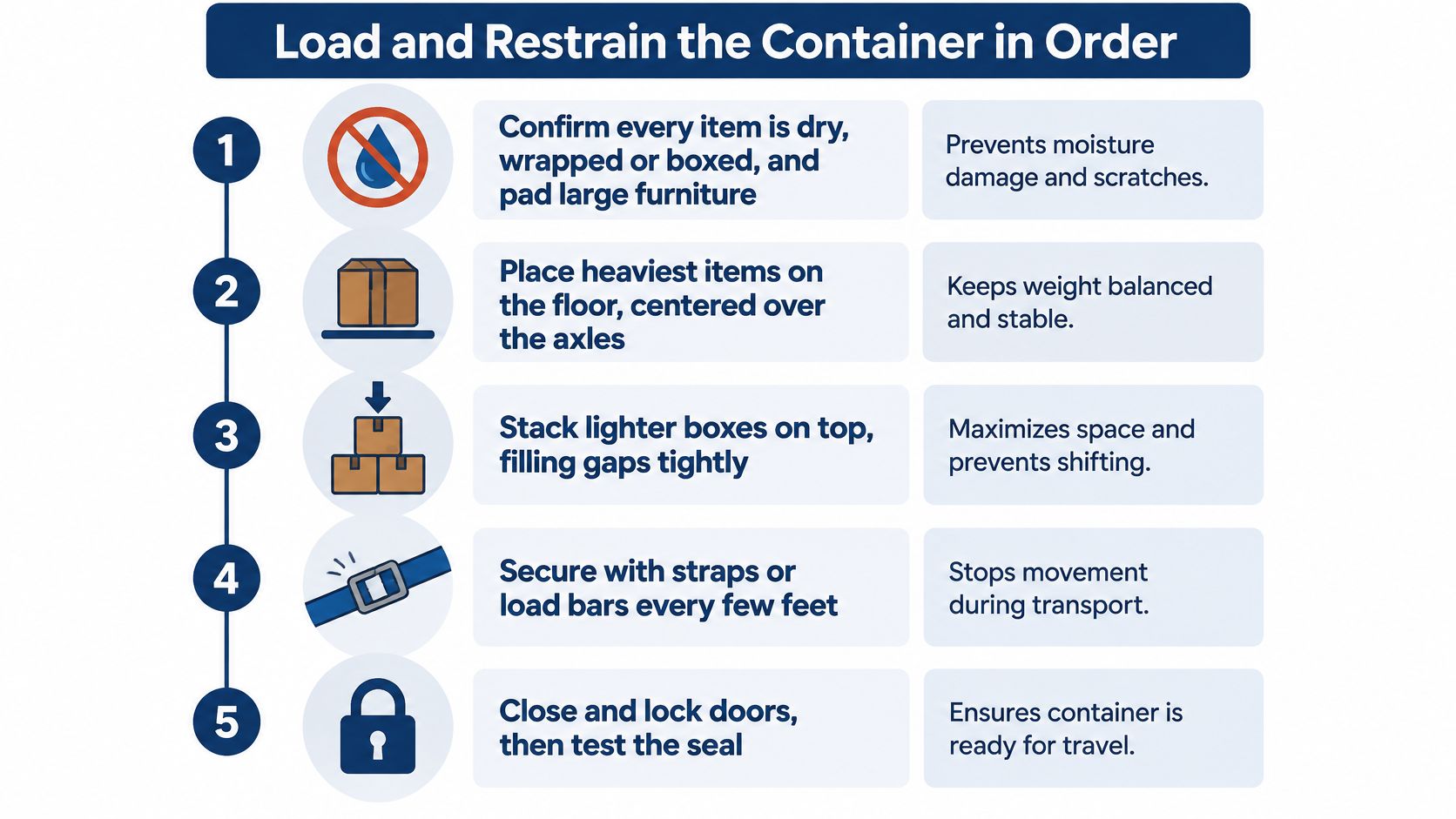
Inspect, dry, and protect everything before carrying it outside. Box loose belongings, wrap vulnerable surfaces, and pad large furniture. Don't seal damp cushions, wet furniture feet, or rain-soaked cartons into storage, because trapped moisture can lead to mold and mildew. The common mistake is treating wrapping as a substitute for drying.
Start at the rear wall and work toward the entrance in compact sections. Stage the next section outside so you can choose pieces by shape and support needs rather than grabbing whatever reaches the doorway first. Loading scattered items throughout the container leaves awkward gaps that become difficult to reach.
Build a stable base at floor level. Use suitable heavy furniture and strong, reinforced small cartons, then place progressively lighter belongings above. Check that the surfaces receiving weight can support it. Loading light cartons first and balancing a dresser across them is not a shortcut, it's a crushing hazard.
Distribute dense pieces front-to-back and side-to-side as the load develops. A safe, appliance, and collection of book cartons shouldn't all end up in the same corner because they happened to be ready together. Keep heavy objects low and use the whole load plan to maintain balance.
Fill gaps with appropriately sized cartons or protected soft goods, but don't force objects against fragile surfaces. Tight packing should prevent travel, not squeeze lampshades or transfer pressure through glass. Avoid filling oversized cartons with books, because an intact box can still be unsafe to lift.
Protect the door operating area and unloading sequence. Keep belongings away from the roll-up mechanism, and reserve accessible positions for items needed promptly at the destination. A bed frame or clearly labeled kitchen carton is useful near the entrance only if removing it won't destabilize the load behind it.
Finish with an inset restraint barrier made from a suitable mattress, rigid cardboard, or flattened cartons, secured with rope or straps. Leave working clearance between the barrier and door assembly. Don't use the closed door itself to hold furniture upright or force it against a bulging load.
Restrain Each Completed Section
Restraint happens during loading, not after everything is inside. Before starting, identify the built-in attachment points and decide which will secure each section. The PODS container-help guidance describes tie-down eyehooks spaced approximately every 4 feet, providing designated locations for rope or tie-downs.
After completing a section, connect restraints to suitable anchor points and cross them where appropriate to form an X-shaped barrier. The crossing pattern helps contain movement across the face of the section rather than relying on a single horizontal line. Use sound rope or compatible straps, protect vulnerable furniture edges, and follow the container provider's attachment instructions.
Don't tighten a strap until a carton buckles or an upholstered arm deforms. The restraint should contain the section without damaging the objects it contacts. If the section only stays upright under excessive tension, rebuild its base.
Consider a tall wardrobe carton that could tip when the container changes direction. A properly positioned restraint across its upper section can help contain it, but only if the carton has stable support underneath. Tying across a weak, top-heavy stack doesn't correct the stack.
Before covering the next anchor point: Secure the section you've just built. You can't reliably repair an inaccessible restraint after loading furniture in front of it.
Check the Load Before Locking
Photograph completed sections while their restraints remain visible, then photograph the finished entrance area. These images document placement and make the unloading arrangement easier to understand. They don't replace checking the load physically.
Use a final checklist rather than a glance through the doorway:
Section security: Confirm that each completed section has its intended restraint and no obvious unsupported stack.
Door operation: Check clearance around the door assembly and test operation without forcing it.
Loose objects: Remove tools, stray hardware, and unboxed belongings from exposed surfaces.
Condition record: Record existing damage, questionable cartons, and anything excluded from the load.
If the door catches, stop and inspect the obstruction. Pulling harder can damage the door or release a shifted object toward whoever opens it next. Close and lock the container only after the entrance remains clear and the load is contained independently of the door.
Hire Loading Help or Load It Yourself
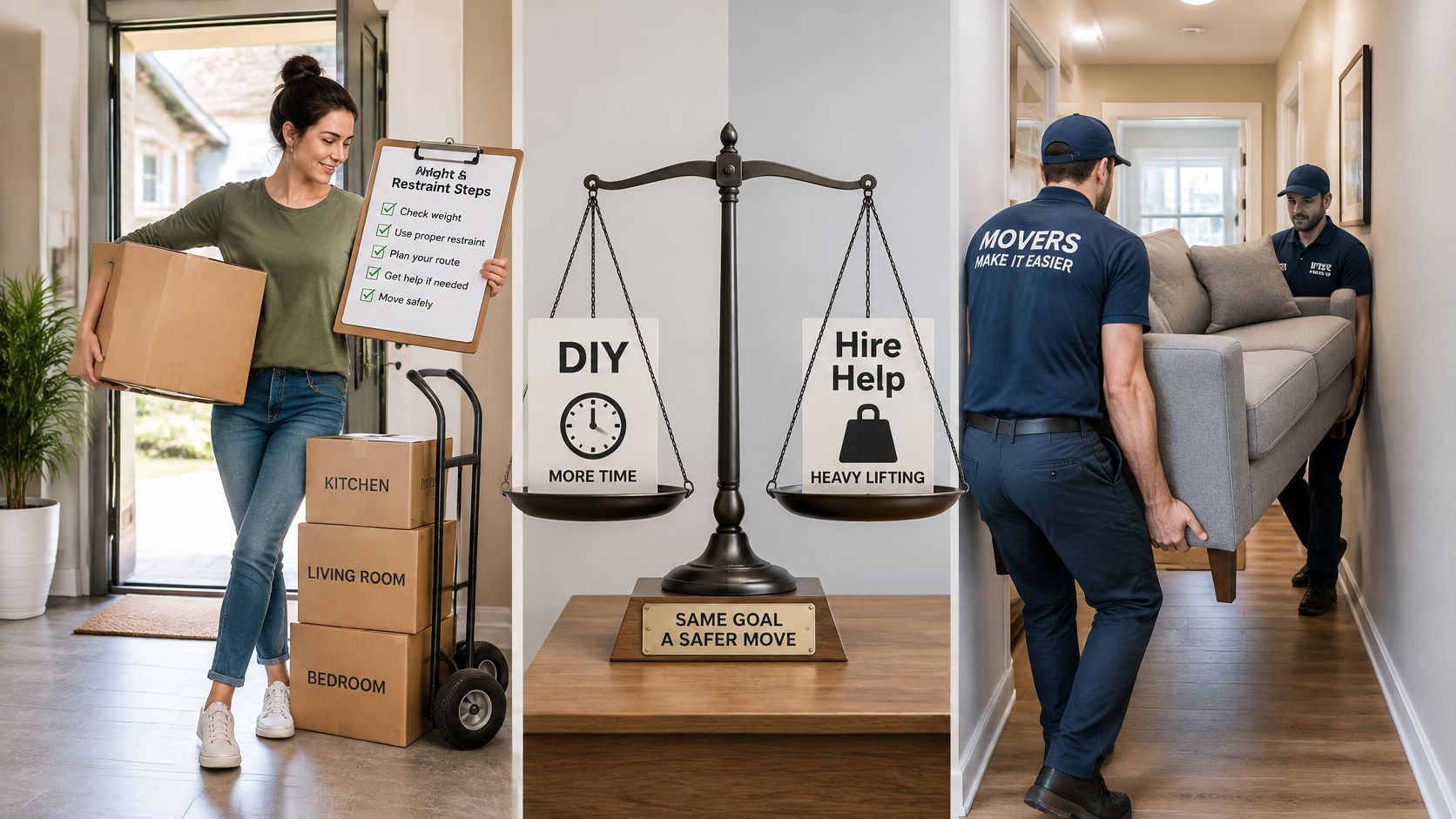
Load it yourself when the contents are manageable, access is straightforward, and you have time to work deliberately. Mostly boxes and light furniture with ground-floor access can be a reasonable DIY move. Hire POD loading help when dense specialty items, difficult access, or a fixed pickup deadline make safe handling and sequencing harder to control.
Container rental and loading labor are separate decisions. The Dataintelo portable-storage-unit rental market report describes typical portable units ranging from 8 to 20 feet in length, but choosing a unit doesn't establish who will carry, protect, or secure its contents. Budget for those tasks explicitly.
Load It Yourself or Hire Loading Help
Situation | Load it yourself | Hire loading help |
|---|---|---|
Heavy dense items such as safes, pianos or appliances | Risky without a lift and weight plan | Crew handles weight, lifting and sequence |
Apartment with stairs, elevator limits or narrow loading zones | Slow and hard to coordinate | Crew plans access and parking ahead of time |
Tight deadline or weekend move | Possible, but rushing increases the chance of mistakes | Reserve early, especially for weekends and month-end |
Mostly boxes and light furniture with ground-floor access | Manageable with deliberate preparation | Optional, mainly for speed |
Decide What You're Paying to Avoid
DIY loading saves the labor charge, but you supply the carrying ability, protective materials, equipment, and judgment. Friends may be available without being prepared to control a heavy object on stairs. If someone cannot safely stop or lower an item, the lift shouldn't begin.
A professional crew adds more than lifting power. It can organize staging, choose a workable loading sequence, and coordinate carrying routes so people aren't waiting with heavy furniture while someone resolves a parking problem.
Our crews have experience with pianos, safes, and large furniture that require additional planning and care. For apartments, we plan around stairs, elevators, parking restrictions, and furniture disassembly and reassembly. We recommend booking as early as possible, particularly for weekends, month-end, and the busy summer moving season.
Before choosing a delivery date, list your heaviest belongings and access constraints. Use that inventory to request a written estimate with clear scope for loading and unloading help, including which tasks you'll complete yourself. Confirm who supplies packing materials and restraints, and who handles unloading at the destination.
Webster Moving Co. offers POD loading and unloading, furniture protection, and packing support across Greater Austin and Central Texas. Visit Webster Moving Co. to request a written estimate, and include your container size, heaviest items, access photos, and planned delivery window so we can build the move around the actual load.
Comments