
Loading Unloading Service: What Crews Actually Do
The rental truck is outside, your move-out deadline is closing in, and the sofa still hasn't made it through the doorway. You've handled the boxes, but the refrigerator, upstairs dresser, and crowded garage are another problem entirely. This is the moment to hire professional loading and unloading help, not to recruit whoever happens to answer your text.
Table of Contents
When Loading and Unloading Becomes Its Own Decision - Buy help for the actual bottleneck
What a Loading and Unloading Service Actually Covers - Put equipment and finish work in writing - Describe the property, not just the furniture
How Loading and Unloading Pricing Actually Works - How access conditions change a labor-only quote - Know which payment protection applies
When a Labor-Only Service Beats a Full-Service Move - Choose based on who owns the coordination - Know when simplicity is worth paying for
What Professional Crews Do on Site - Good lifting isn't a strength contest - Watch the work before problems multiply
Misconceptions That Cost Homeowners Money - Safety includes the truck interface - Drop the assumptions that create disputes
Your Pre-Booking Checklist for a Loading and Unloading Crew - Before you accept the estimate - Before the truck or container arrives - Before the crew leaves
When Loading and Unloading Becomes Its Own Decision
A loading unloading service separates the physical handling from the transportation. You arrange the truck, trailer, or portable container. The crew handles the agreed work of getting your belongings into it, out of it, or both.
That separation matters when you've already paid for transportation. You don't necessarily need another truck or a complete moving package. You need people who can evaluate the remaining work, bring appropriate equipment, and finish without turning a tight doorway into a damaged sofa.

Buy help for the actual bottleneck
Consider these situations as planning examples, not interchangeable jobs:
Your rental truck is ready: You can drive, but you can't safely carry the furniture or build a secure load.
Your POD is arriving: Transportation is arranged separately, and you need a crew available when the container becomes accessible.
Your office is splitting responsibilities: Staff handle computers and sensitive files while movers handle desks, cabinets, and bulky equipment.
Your move stalled halfway through: The remaining inventory needs a fresh assessment, especially if the truck is already partially loaded.
In each situation, the purchase decision is about handling capacity and responsibility, not extra hands. Someone needs to decide what moves first, which pieces need protection, and whether the available truck space can accommodate the inventory safely.
Booking rule: Hire for the difficult work you actually have, not the move you hoped would be easy.
Book once you know the inventory, transportation plan, and access window. Waiting until friends cancel or a container blocks the driveway leaves you negotiating under pressure.
A useful booking conversation should establish what the crew will do, how the bill will be calculated, when they can start, and who will make decisions on site. If the provider can't answer those questions clearly, keep looking.
What a Loading and Unloading Service Actually Covers
Labor-only doesn't mean equipment-free. It means transportation isn't automatically part of the purchase. Before you compare quotes, ask each provider to describe the handling work and equipment included in its offer.
For loading, request a scope that covers carrying items from their current locations, protecting furniture, organizing the load, and securing belongings for travel. For unloading, specify whether the crew will place furniture in assigned rooms or merely stage everything inside the entrance.
Put equipment and finish work in writing
Don't accept “we bring everything” as a complete equipment description. Your quote should address:
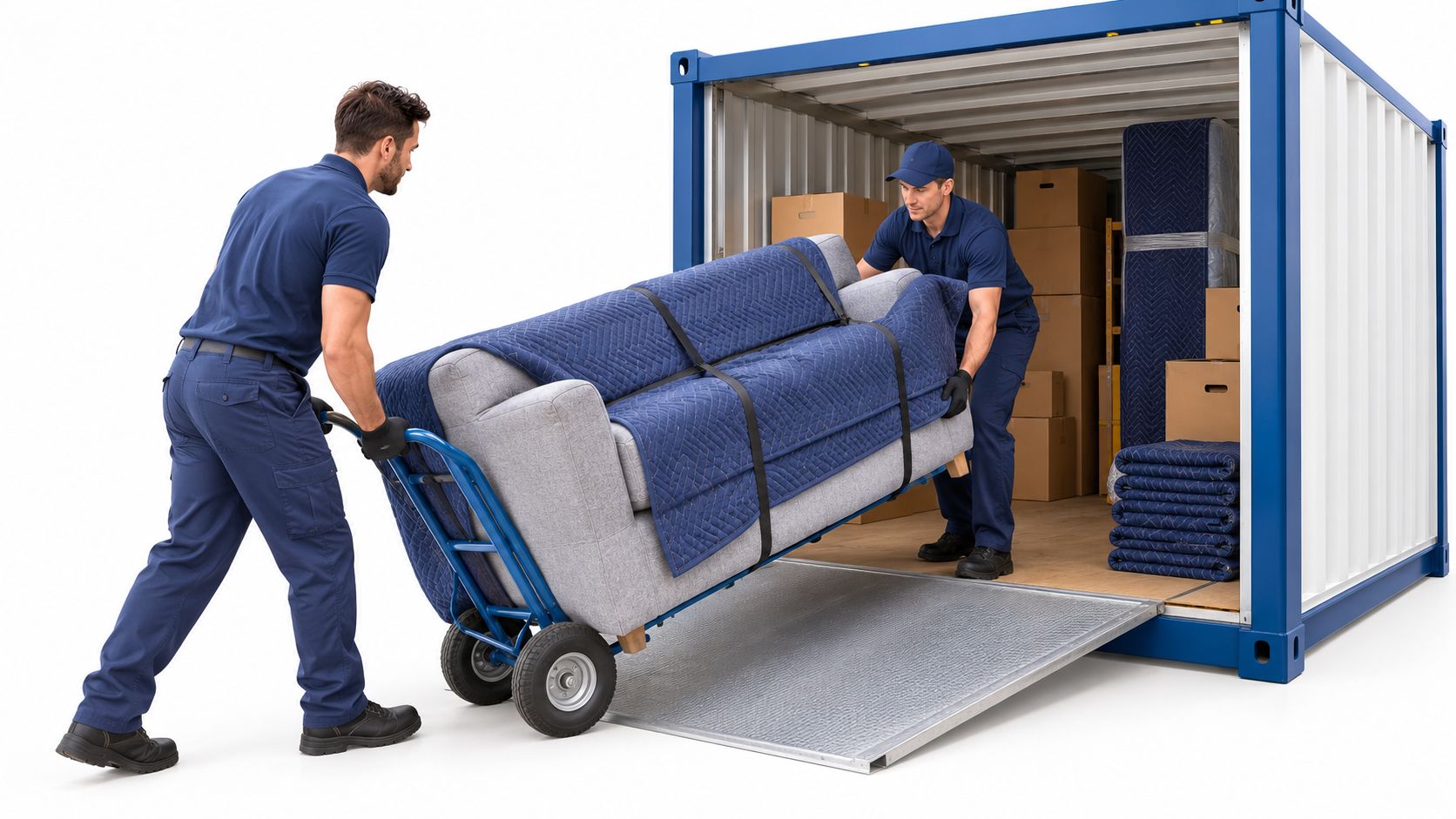
Protective materials: Moving blankets, furniture pads, and any wrapping materials, including whether they're supplied, rented, or left with the shipment.
Handling tools: Furniture dollies, hand trucks, lifting straps, and equipment suited to the actual stairs and appliances.
Load securement: Who supplies tie-downs and checks that the truck or container has suitable attachment points.
Furniture work: Which beds, tables, or shelving units the crew will dismantle and reassemble.
Completion standard: Final room placement, removal of protective materials, and whether furniture repositioning is included.
Packing loose kitchenware isn't the same job as carrying sealed cartons. Neither is disconnecting an appliance, mounting a television, or assembling newly purchased furniture. Treat those as separate requests unless the written agreement includes them.
Scope belongs in writing before the truck is opened, not in a negotiation beside the ramp.
Describe the property, not just the furniture
For an upstairs Round Rock rental, explain the stair layout and tight turns. For an Austin high-rise, confirm the building's elevator procedure and loading entrance. At a suburban home, photograph the driveway and anything that limits truck clearance.
These are details to verify at your property, not assumptions a crew should discover on arrival. A sofa inventory without a doorway measurement can leave the estimator missing the most important part of the job.
Send the same scope to every provider. Otherwise, you're comparing different services disguised as competing prices.
How Loading and Unloading Pricing Actually Works
Ask what starts the clock before asking for the hourly rate. An attractive rate means little if you don't understand minimum charges, travel billing, waiting time, or which tasks fall outside the estimate.
An hourly proposal ties the bill to crew time under the contract's billing rules. A flat-rate proposal fixes a price for a defined job, so inventory changes and exclusions deserve close attention. If a transportation quote uses shipment weight or volume, ask the provider to separate those charges from loading and unloading labor rather than treating everything as an unexplained total.

How access conditions change a labor-only quote
The following are potential impacts to confirm, not fees every mover charges.
Access condition | Typical impact | Line item to confirm on quote |
|---|---|---|
Stairs or difficult landings | More handling effort and equipment planning | Stair charge or inclusion in labor |
Truck parked away from the entrance | Longer carrying route | Long-carry threshold and charge |
Restricted elevator availability | Waiting or interrupted work | Waiting-time policy and building fees |
Large truck can't reach the property | Possible transfer to another vehicle | Shuttle responsibility and price |
Piano, safe, or awkward appliance | Specialized handling requirements | Specialty-item labor and equipment |
Container not accessible on arrival | Delayed start or rescheduling | Standby, cancellation, and return charges |
For broader budgeting, use this guide to the average cost of moving a three-bedroom house as context, not as a substitute for a labor-only scope.
Know which payment protection applies
For interstate household-goods moves, a mover generally can't require payment above 110% of a non-binding estimate or 100% of a binding estimate before delivering the shipment, according to the FMCSA's moving estimate and delivery-payment guidance. That delivery protection isn't a universal cap on the final bill, and you shouldn't assume it governs a separate local labor-only contract.
Ask whether you're hiring the transporting carrier or an independent handling crew. The distinction affects which agreement controls the work and which protections apply.
Before paying a deposit, confirm the crew size, billing unit, minimum commitment, approved extras, cancellation terms, and balance due date. Require written authorization for scope changes. Transparent pricing is a paper trail, not a reassuring sentence on the phone.
When a Labor-Only Service Beats a Full-Service Move
Labor-only is a strong choice when you've already solved transportation and can manage the handoffs. It's a weaker choice when you're buying cheap lifting help but leaving yourself responsible for a complicated move you don't have time to coordinate.
Don't compare the labor quote with a full-service total and declare victory. Compare the complete plan, including vehicle arrangements, supplies, your driving responsibilities, scheduling, and what happens if something goes wrong.
Choose based on who owns the coordination
Option | Choose it when | Reconsider it when |
|---|---|---|
Labor-only | You control transportation and need professional physical handling | You can't supervise access or manage the transport schedule |
Full-service | You want packing, handling, and transport coordinated under a clearly defined agreement | You've already arranged suitable transportation and don't need the additional services |
Hybrid | You can divide responsibilities cleanly between providers | Nobody accepts responsibility for the gaps between providers |
A Georgetown homeowner using a container during a remodel might need furniture moved into storage now and returned later. An Austin renter might need only destination unloading, timed to the building's approved access window. A Pflugerville office could keep IT equipment with its own staff while hiring movers for furniture.
Those are sensible divisions if the handoffs are explicit. Decide who checks readiness, who reports delays, and who can approve a change before booking.
Know when simplicity is worth paying for
Choose coordinated service when extensive packing, fragile pieces, or a complicated long-distance schedule would otherwise require you to manage multiple contractors. For high-value belongings, ask each provider to explain its damage responsibility in writing. Don't assume one company's coverage follows the shipment through another company's work.
For limited inventories, this guide to moving small loads can help you assess whether you need a complete relocation service or a narrower handling appointment.
My rule is straightforward: buy labor-only when you can confidently manage everything outside the lifting. If you can't, pay for coordination rather than trying to improvise it on moving day.
What Professional Crews Do on Site
A professional crew starts by looking, not lifting. The lead should walk the route, compare the inventory with the booked scope, identify existing damage, and discuss pieces that may need a different handling method.
Watch for a plan that connects the rooms to the truck. The crew should know where to stage blankets and tools, which furniture needs dismantling, and how to keep boxes from blocking the next carry.
Good lifting isn't a strength contest
The revised NIOSH Lifting Equation begins with a 51 lb load constant under ideal two-handed conditions, then adjusts for reach, hand height, vertical travel, repetition, twisting, and grip, as explained in the CCOHS guide to assessing lifting tasks. Real moving conditions can lower the recommended weight limit; that baseline isn't blanket permission for someone to lift every similarly weighted object.
A crew reaching deep into a POD faces a different task from lifting a well-gripped carton at waist height. A stair landing can force rotation, and an appliance may offer poor handholds. The sensible response is to change the method, not demand more effort.
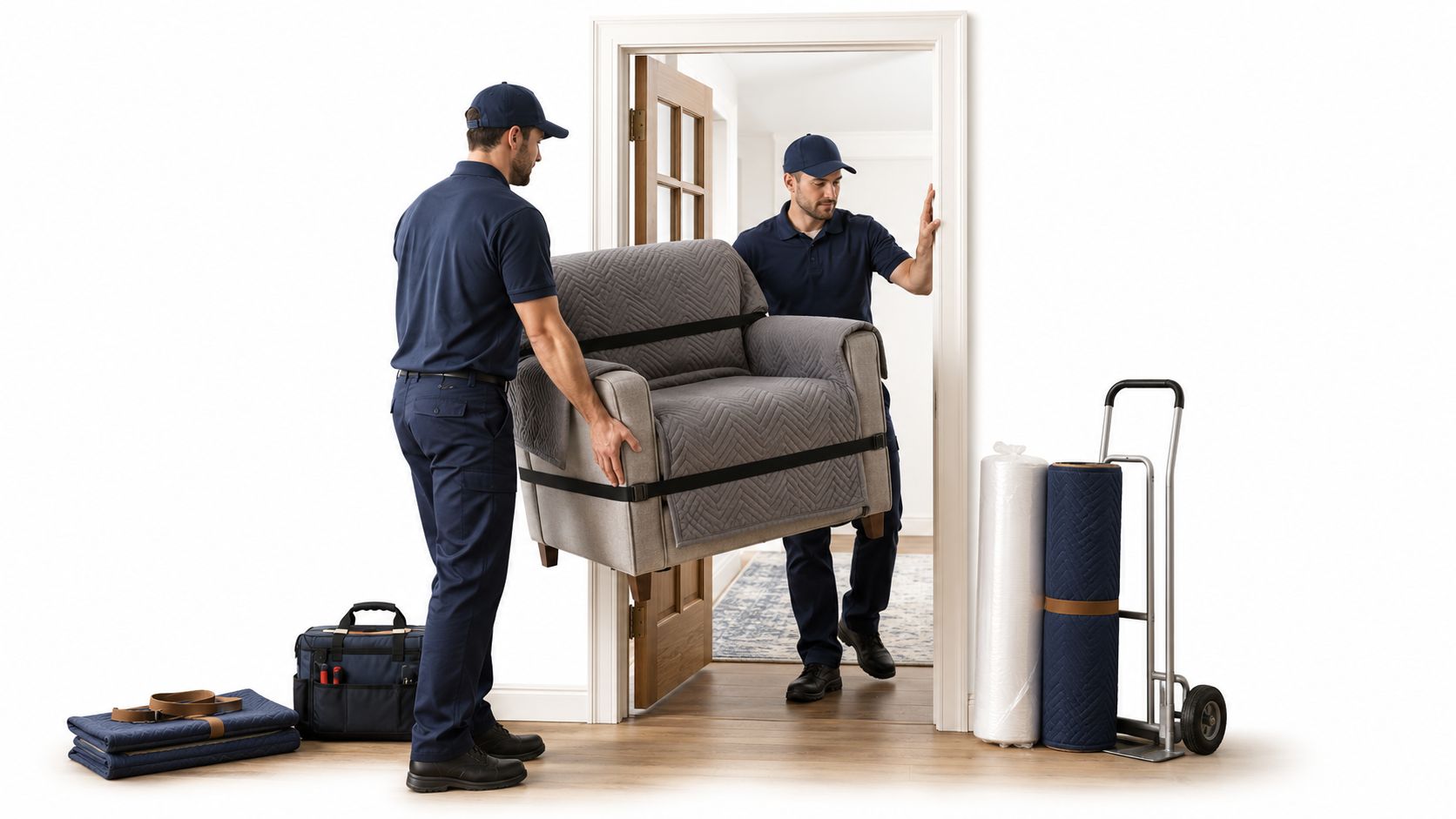
Look for controlled team carries, suitable mechanical aids, and staging that reduces awkward reaches. Dense belongings belong in manageable cartons, while bulky pieces need a plan that accounts for their dimensions as well as their weight.
Watch the work before problems multiply
During the initial walkthrough and first carries, check for:
Protection before contact: Pads and doorway protection go into place before furniture brushes against finished surfaces.
Clear leadership: Someone coordinates turns, pauses, and placement instead of several people issuing conflicting instructions.
Appropriate tools: Movers choose equipment for the object and route rather than forcing every item onto the same dolly.
Controlled pace: Workers pause to reset a poor grip or clear an obstruction instead of rushing through it.
At unloading, give room assignments before items leave the truck. Keep the route clear and direct questions through the crew lead rather than interrupting someone mid-carry.
If cartons are open, fragile items are loose, or furniture isn't ready for handling, arrange preparation separately. This packing and unpacking service guide helps distinguish that work from the loading appointment.
Misconceptions That Cost Homeowners Money
“Any helpers can do the job” confuses availability with capability. A willing neighbor may carry cartons comfortably but still lack the equipment, judgment, or agreed damage responsibility needed for a refrigerator or loaded container.
Don't infer insurance from a uniform or a business name. Request evidence of coverage and ask what the agreement says about damage to belongings and property.
Safety includes the truck interface
OSHA's warehouse hazard and loading-dock guidance requires dockboards or bridge plates to be secured against movement and transport vehicles to be restrained with wheel chocks or equivalent measures before workers cross the vehicle-to-dock gap. Its forklift guidance also emphasizes stable loads, rated capacity, and slow operation near docks and dock plates.
At a home, apply the same prevention principle to the actual route: check the ramp or liftgate, prevent unintended vehicle movement, and keep people clear of moving equipment. Don't treat warehouse requirements as identical legal requirements for every driveway, but don't ignore the hazards either.
Stop-work standard: A crew should refuse an unsafe transition, not prove its determination by carrying across it.
Drop the assumptions that create disputes
An estimate is the final bill: Read the estimate type and change provisions. The interstate delivery-payment protection discussed earlier doesn't eliminate the need to review legitimate charges.
A tip settles damage: Tipping and documenting damage are separate matters. Photograph the problem, notify the provider promptly, and follow the written claims process.
Unloading must cost less: A clear loading site tells you nothing about the destination. Restricted access, furniture placement, and requested assembly can make unloading the more demanding appointment.
A packed container is ready to unload: Confirm that its doors are accessible and the contents can be approached safely. If you see shifting or pressure against the doors, ask the crew to assess it before proceeding.
The expensive mistake is assuming a task is simple because the furniture is familiar. Hire people who explain their method and boundaries before they touch your belongings.
Your Pre-Booking Checklist for a Loading and Unloading Crew
Don't confirm a crew with a vague address, an approximate pile of furniture, and a promise that parking should be fine. Give the estimator enough information to make a usable commitment.
Choose a licensed, insured provider that publishes its credentials and answers scope questions in writing. Ask how those credentials apply to the service you're purchasing, especially when transport and handling come from different companies.
Before you accept the estimate
Send the inventory: Include photos of large pieces, awkward shapes, fragile items, and anything requiring dismantling.
Confirm the commercial terms: Get the written scope, crew size, included equipment, billing rules, deposit, balance terms, and process for approving extras.
Identify the contracting parties: Know who provides labor, who transports the shipment, and whose agreement covers each stage.
Clarify damage procedures: Request the reporting process and relevant coverage terms before work begins.
Before the truck or container arrives
Verify access: Photograph entrances, stairs, parking areas, and the planned container location. Check placement restrictions with the property manager or relevant authority.
Reserve the building window: Confirm elevator access and loading-zone arrangements rather than relying on an informal conversation.
Plan for delays: Decide whom to contact if delivery slips and whether the crew can reschedule. Don't promise an exact unloading duration without sharing the inventory and route.
Keep essentials accessible: Label room destinations and separate the belongings you'll need before the container is fully emptied.
Before the crew leaves
Check completion: Match belongings against your inventory and inspect agreed furniture placement and assembly.
Record concerns: Take photos and raise issues with the crew lead while everyone is still present.
Retain paperwork: Keep the estimate, inventory, payment records, photos, and bill of lading when one applies.
The first conversation should leave you knowing what's included, what could change, and who makes the call. If it doesn't, don't book yet.
For a Central Texas move, Webster Moving Co. is one option for professional loading and unloading of rental trucks, trailers, PODs, and storage containers. Visit the company to request a no-obligation estimate, and send your inventory, access photos, and preferred handling window so the crew can scope the work before moving day.
Comments