%20copy-01_edited.jpg)
Average Cost of Local Move 3 Bedroom House
A typical local 3-bedroom move should be budgeted at $1,500 to $2,000, with real quotes often landing anywhere from $1,200 to $3,500 depending on access and labor time. If your quote is outside that band, the first thing to check is not the truck, it's the walk, the stairs, the parking, and the clock.
You're probably staring at three estimates that look nothing alike and wondering which one is real. The answer is usually the one that explains access in plain language, because a 3-bedroom move isn't priced by bedroom count alone, it's priced by how hard your home is to move out of and into.
Table of Contents
What a 3 Bedroom Local Move Usually Costs - Start with the right definition of local - Read the quote like a mover does
How Local Movers Actually Price the Job - The dispatcher is pricing access, not just furniture - What the quote is really built from
Breaking Down Labor, Truck, and Materials - Labor takes the biggest bite - Truck costs are usually hidden in the hourly math - Materials are where full-service pricing climbs
A Realistic 3 Bedroom Move Scenario - The base move looks reasonable - Then access friction starts stacking up
Add-On Costs Most Homeowners Forget - The hidden charges that catch people - The rule on stairs and delays
Full-Service, Hybrid, or DIY Moving - Full-service buys back your time - Hybrid keeps the price in the middle - DIY only makes sense if you can spare the labor
Practical Tips to Save on Your Local Move - Do the work that lowers billable time - Cut material and scheduling waste - Demand the quote in writing
Your Pre-Move Cost Checklist - Estimate preparation - Quote comparison - Pre-move actions - Move day confirmations
What a 3 Bedroom Local Move Usually Costs
Homeowners usually want a clean number before they start packing, and the honest planning benchmark is $1,500 to $2,000 for a typical local 3-bedroom move. Independent guides put real-world local estimates in a wider band, roughly $1,200 to $3,500, because crew size, access, and time on site can swing the final bill more than mileage alone, especially when the move is local and billed by the hour rather than by distance (North American Moving Services).
Start with the right definition of local
For pricing purposes, local usually means under 50 miles and no state-line crossing. That matters because local movers bill around labor time, while longer moves use a different pricing model. It also changes what shows up on the estimate, like minimum hours, travel time, and access charges.
Read the quote like a mover does
A quote that looks low can still turn expensive if your home has any of these issues:
Three flights of stairs
A long carry from truck to door
No elevator
Tight parking on a busy street
Heavy specialty items like a piano or safe
Practical rule: If the mover hasn't asked about stairs, parking, and the distance from the curb to your front door, the quote isn't finished.
Use a fast self-check before anyone arrives. Count the bedrooms, estimate how much is boxed and ready, and write down every access problem at both homes. That's the difference between a quote you can defend and one that grows on moving day.
Scenario | Price Range | Typical Access Conditions |
|---|---|---|
Clean, easy local move | Lower end of the local band | Short carry, good parking, no stairs |
Typical 3-bedroom local move | $1,500 to $2,000 | Normal household volume, moderate labor time |
Complicated local move | Upper end of the local band | Stairs, long carry, parking friction, specialty items |
How Local Movers Actually Price the Job
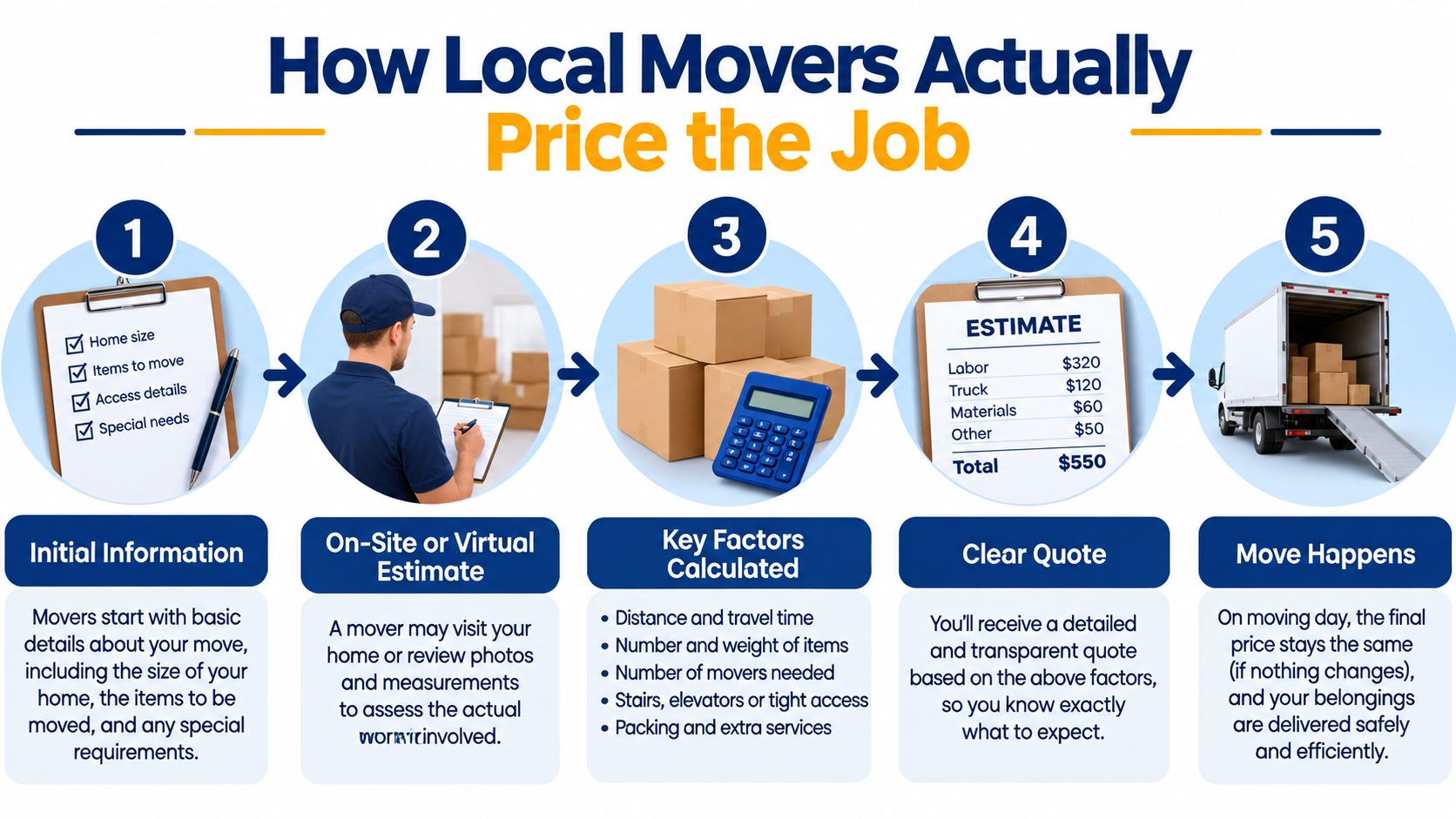
Local movers don't start with a magic number. They start with a crew, a truck, and a clock. The price is built from hourly labor, then adjusted for how much time the house is likely to consume, which is why two 3-bedroom homes can produce very different quotes even when they're the same size.
The dispatcher is pricing access, not just furniture
When a dispatcher looks at your home, they're trying to estimate how many labor hours the job will take. Square footage helps, but floor level, elevator access, carry distance, and item weight tell them more. A third-floor walk-up with a narrow landing is a different job from a one-story house with a driveway pull-up, even if both are three bedrooms.
A good mover is estimating friction, not furniture count.
That's why the hourly structure makes sense. A 3-bedroom local move often needs a larger crew and a truck sized for full household volume, and the pricing reflects that time on site. Many companies also apply a minimum charge, so even a fast move still gets billed as a real production window rather than a quick errand.
What the quote is really built from
Most estimates are a blend of three things:
Crew size, which changes how fast the truck gets loaded and unloaded
Access conditions, which change the pace of the move
Total billable time, which is the number that really drives the invoice
Some movers give flat-rate pricing, but don't let that confuse you. Flat-rate quotes are usually just hourly math wrapped into one number, with access risk already built in. If you want an estimate you can trust, ask how the company decided on the crew size and how it treated stairs, elevator delays, and carry distance.
Breaking Down Labor, Truck, and Materials
A moving bill looks messy only until you split it into the pieces that matter most. For a 3-bedroom local move, labor is the main cost, truck and fuel are usually wrapped into the service rate or shown separately, and materials become important the minute you choose packing help or start protecting fragile items.
Labor takes the biggest bite
For a standard 3-bedroom move, labor usually dominates the invoice because it scales directly with crew size and hours. If the job runs long, the bill rises fast. A mover can quote a fair base and still end up higher if the day turns into more lifting, more stair work, or more back-and-forth from the truck.
Truck costs are usually hidden in the hourly math
Truck use is often bundled into the moving rate, but some binding estimates separate it out. Fuel and transport charges show up more clearly on local runs that cover a modest amount of distance or require extra coordination. The important part is not the label, it's whether the estimate tells you what's included before move day.
Materials are where full-service pricing climbs
Packing supplies matter more than most homeowners expect. Boxes, tape, paper, shrink wrap, mattress bags, and TV boxes all add up if the crew is doing the packing for you. If you want full-service convenience, pay attention to the material line because that's where the quote starts to feel less like labor and more like a retail order.
Line Item | Typical Range | What Drives the Cost |
|---|---|---|
Labor | Main share of the bill | Crew size, access time, total hours |
Truck and fuel | Usually bundled or listed separately | Distance, travel time, transport setup |
Packing materials | Varies with service level | Box count, fragile items, full-service packing |
If you're comparing estimates, don't just look at the total. Look at what's packed into labor versus materials, because a low headline price can hide a very expensive packing line later.
A Realistic 3 Bedroom Move Scenario
A believable 3-bedroom move doesn't start with drama. It starts with boxes in the hallway, a crew arriving in the morning, and a bill that looks normal until access problems show up. That's where the quote changes.
The base move looks reasonable
Say a 1,800-square-foot home is booked for a local move with a four-person team. The estimate starts around $1,700, which is the kind of number homeowners expect when the house is average, the distance is local, and the movers can work steadily. The team is hired to handle loading, transport, standard wrap, and the usual house-to-truck pace.
Then access friction starts stacking up
Now add a third-floor walk-up with no elevator. Then add a tight street where the truck can't park close to the door. Then add a glass cabinet and an antique mirror that need special handling. None of those problems makes the home larger, but each one makes the day slower and more expensive because the clock keeps running.
A rough walk-through looks like this:
Line Item | Cost Added | Running Total |
|---|---|---|
Base move with crew and truck | Starting estimate | $1,700 |
Third-floor stair access | Adds labor time | Higher than base |
Tight parking and shuttle logistics | Adds coordination time | Higher still |
Specialty crating for fragile pieces | Adds custom handling | Closer to final total |
By the end, the bill can settle near $2,450 if the move absorbs those access problems. That's not a weird outcome. It's exactly how local moving math behaves when the home itself slows the crew down.
The lesson is simple. If you hear a quote that sounds too low for your building, trust your access conditions, not your wishful thinking. Stairs, parking, and specialty pieces are the main price drivers.
Add-On Costs Most Homeowners Forget
Most move quotes don't blow up because of one giant surprise. They grow because of a stack of smaller charges that nobody mentioned clearly on the phone. The problem isn't the add-on itself, it's the fact that the crew can only bill what the day demands.

The hidden charges that catch people
The most common extras are the ones tied to access and time:
Long carries, which apply when the walk from truck to door goes past the point the crew planned for
Stair fees, which kick in when movers have to keep hauling heavy furniture up flights
Packing services, when you decide you don't want to spend nights boxing everything yourself
Fuel and transport surcharges, which can show up on cleaner estimates
Specialty crating, which comes up for artwork, glass, antiques, and other fragile items
Long carries are especially easy to miss because the truck may be parked legally, but still too far away to keep the job efficient. Packing is the other silent bill driver, because a homeowner who starts with “we'll pack ourselves” often changes course once the calendar gets tight. If you want to see how a packing service fits into the moving process, review packing services guidance before you lock the date.
Movers rarely volunteer the expensive stuff first. They usually talk about the base rate, then the access issues after they've seen the property.
The rule on stairs and delays
Stairs hit harder than people expect because they slow every trip, not just the first one. Elevator reservations can also waste time if a building doesn't have the cab ready when the crew arrives. That lost time becomes billable labor, and the quote climbs even though the furniture list hasn't changed.
If your home has tight access, ask for those add-ons in writing before you sign. The cheapest estimate is often the one that forgot to price your building correctly.
Full-Service, Hybrid, or DIY Moving
The right moving plan depends on how much labor you want to buy back with money. For a 3-bedroom local move, the three main choices are full-service, hybrid, and DIY, and each one has a very different stress profile.
Full-service buys back your time
Full-service movers pack, load, transport, and unload. That's the smoothest option, but it costs the most because you're paying for labor, packing help, and the convenience of having the heavy work handled end to end. It's the cleanest fit when your schedule is tight or when the home has access problems that would turn your weekend into a grind.
Hybrid keeps the price in the middle
Hybrid moving means you pack your own boxes and let the crew handle the heavy lifting and driving. That's the sweet spot for a lot of homeowners because it trims the service bill without forcing you to rent a truck and manage every piece yourself. If you want a residential mover that handles local home moves and can also scope larger, more complicated jobs, residential moving services are the category to compare.
DIY only makes sense if you can spare the labor
DIY with a rental truck is the cheapest on paper, but it asks a lot from your body and your schedule. You're trading cash savings for long hours of lifting, loading, and driving, and you're also taking on more risk if you don't have proper padding and moving gear.
Service Model | Typical Cost | Labor Hours | Best Fit |
|---|---|---|---|
Full-service | Higher | Lowest for the homeowner | Busy families, tight timelines |
Hybrid | Mid-range | Moderate | Homeowners who can pack early |
DIY | Lowest upfront | Highest for the homeowner | Small budgets, plenty of help |
If you're choosing between them, don't ask which is cheapest. Ask which one leaves you with the least regret after move day.
Practical Tips to Save on Your Local Move
The best savings happen before the crew ever arrives. You don't need tricks, you need fewer hours on the clock and fewer reasons for the movers to slow down.
Do the work that lowers billable time
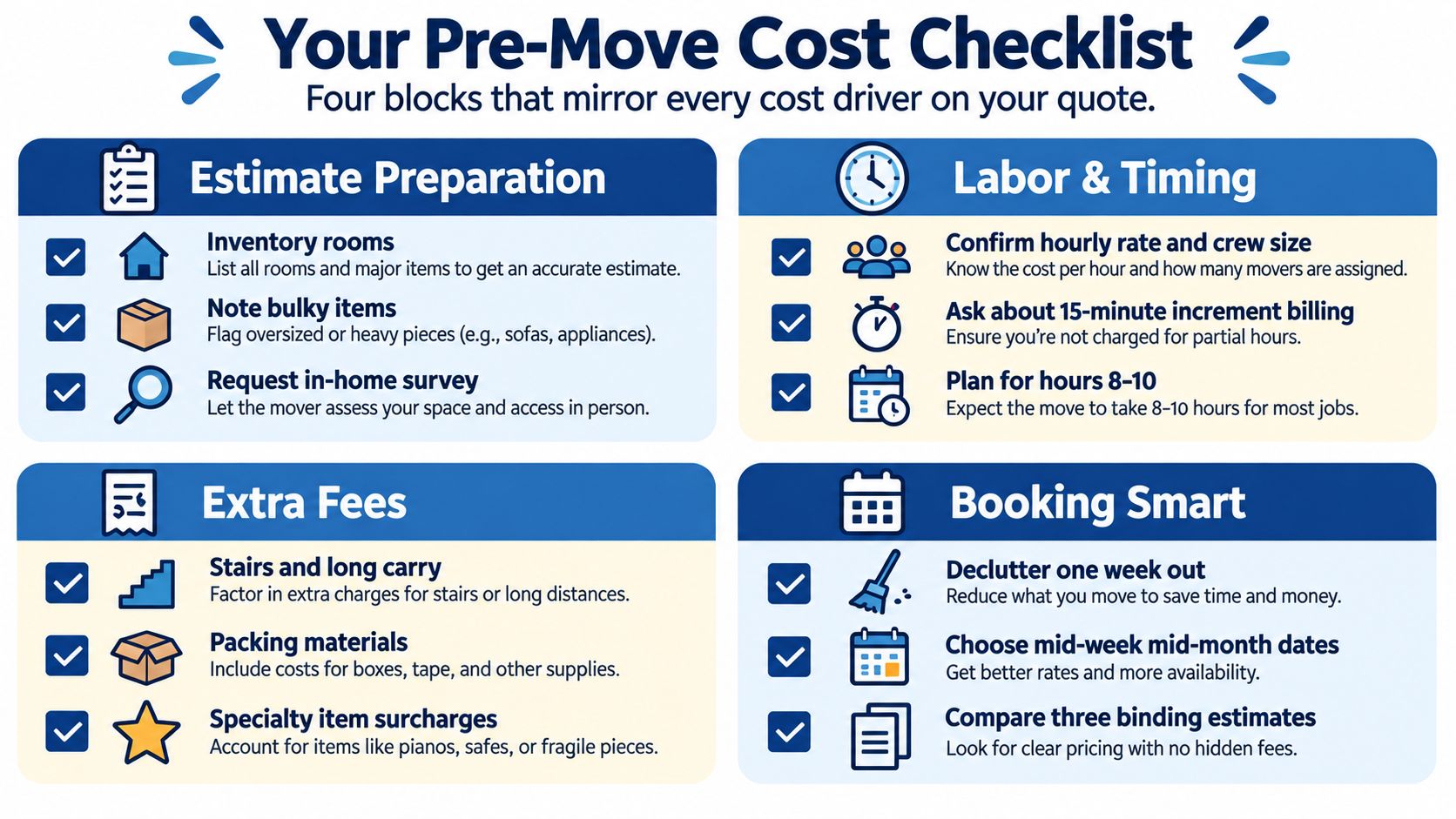
Start with decluttering one week out. Every box and piece of furniture you eliminate cuts volume, and volume is what eats labor time. Then pack non-fragile rooms in clearly labeled groups so the movers aren't spending extra minutes figuring out where things go.
Cut material and scheduling waste
Free boxes from grocery stores or local marketplace apps can save you from buying more packing supplies than you need. Schedule mid-week or mid-month if you can, because peak dates tend to be less forgiving when crews are in high demand. Reserve parking and elevator access early, because a missed permit or missed time window turns into waiting time that you pay for.
Demand the quote in writing
Ask for an itemized binding estimate, not a loose ballpark. That forces the mover to spell out labor, access, fuel, and materials before the truck rolls up. If the estimate doesn't explain the path from truck to door, it's not a serious estimate.
A simple timing math check helps. If you cut two hours of labor and the hourly rate is $150, you've saved $300. That kind of savings usually matters more than a tiny discount on the rate itself.
Your Pre-Move Cost Checklist
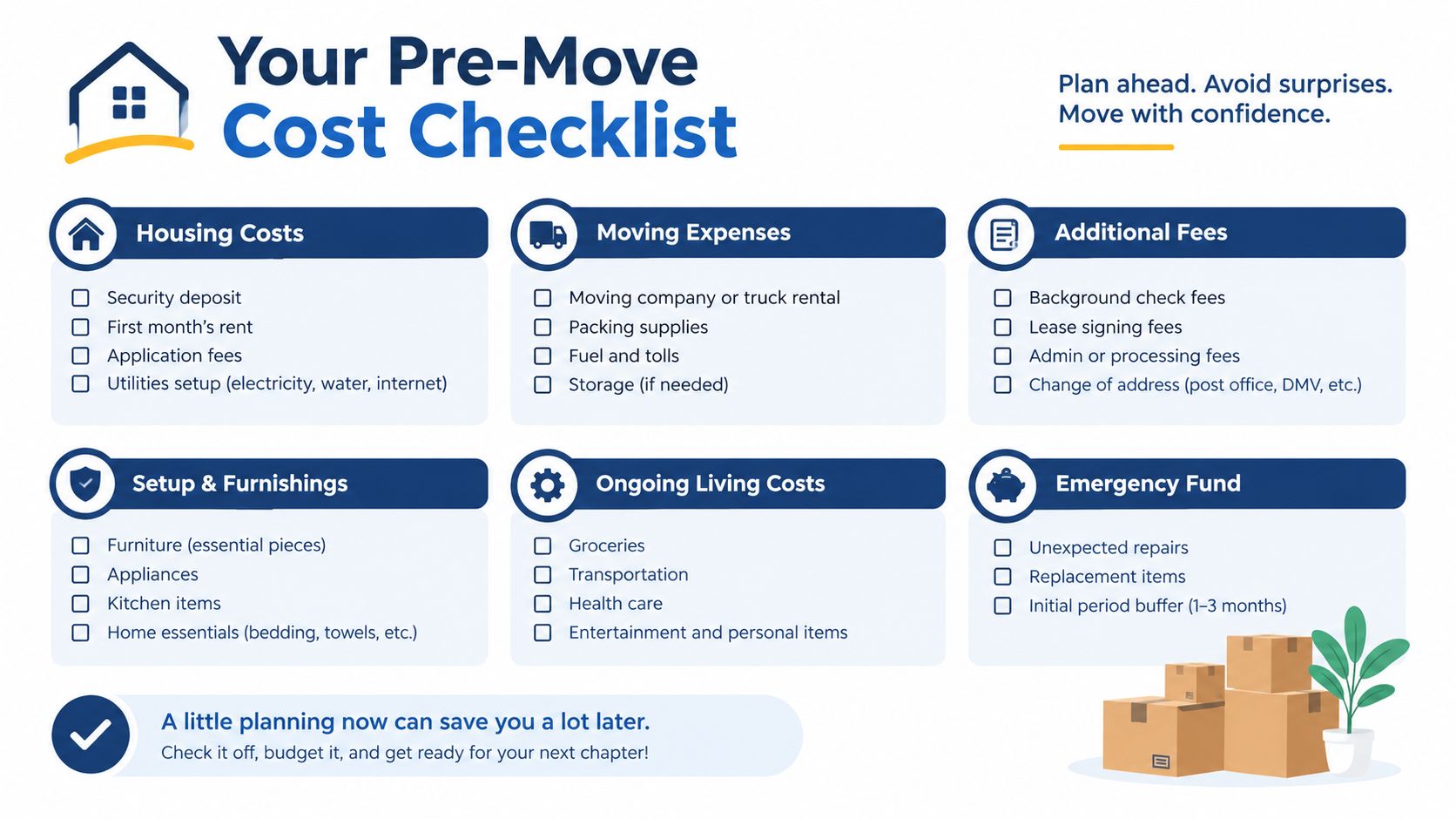
The fastest way to control the bill is to treat the quote like a checklist, not a guess. Each item below protects a different part of the total, and the point is to catch expensive details before they become billable time.
Estimate preparation
Inventory every room, because a complete list helps control the size of the crew and the length of the job.
Photograph stairways and tight hallways, because access issues drive labor time.
Measure parking distance and note elevator availability, because those details affect the quote before the crew arrives.
Use a quote form for larger or trickier homes, like this moving quote form, when you want the estimate to reflect the actual job.
Quote comparison
Request binding estimates, so the final bill matches the scope you approved.
Confirm crew size and hourly minimum, because that's where local pricing starts.
Ask about fuel and travel fees, since those often live outside the headline rate.
Pre-move actions
Declutter before packing, because less volume means less labor.
Pack labeled boxes by room, because faster loading keeps the clock down.
Reserve building permits early, because access delays cost money.
Schedule utilities ahead of time, so the crew isn't waiting around for avoidable handoffs.
Move day confirmations
Verify the arrival window, because a late start affects the whole day.
Clear pathways inside and outside, because the crew moves faster when they aren't dodging obstacles.
Document any damage right away, because clear records prevent disputes later.
Keep this list close and you'll spot the cost drivers before they show up on the invoice.
Webster Moving Co. handles residential moves, packing, and specialty item transport for homes with stairs, tight parking, or other access issues that change the final price. If you're lining up a local 3-bedroom move and want a written estimate that reflects the job, visit Webster Moving Co. and ask for a quote that accounts for your home's access, crew size, and materials.
Comments